Home / Case studies / Industrial wastewater analysis
IC-VIS™ · INDUSTRIAL WASTEWATER

Portable wastewater analysis at Stena Recycling.

Stena Recycling evaluated IC-VIS™ for reagent-based analysis of turbid wastewater samples, and has since used the instrument in its laboratory workflow.

Discuss a wastewater applicationSee the data examples →
Stena Recycling
A real industrial customer application
Turbidity compensation
Instant Clarity™, built into every measurement
Lab + field
Portable, used in daily laboratory workflow

— At Stena RecyclingStena Recycling

Stena Recycling tested IC-VIS™ across different wastewater samples, including phosphorus analysis used in its treatment-process work. The goal was to simplify analysis of turbid samples while keeping established colorimetric chemistry — IC-VIS™ let established methods be used with turbidity compensation, reducing unnecessary sample handling in suitable measurements.

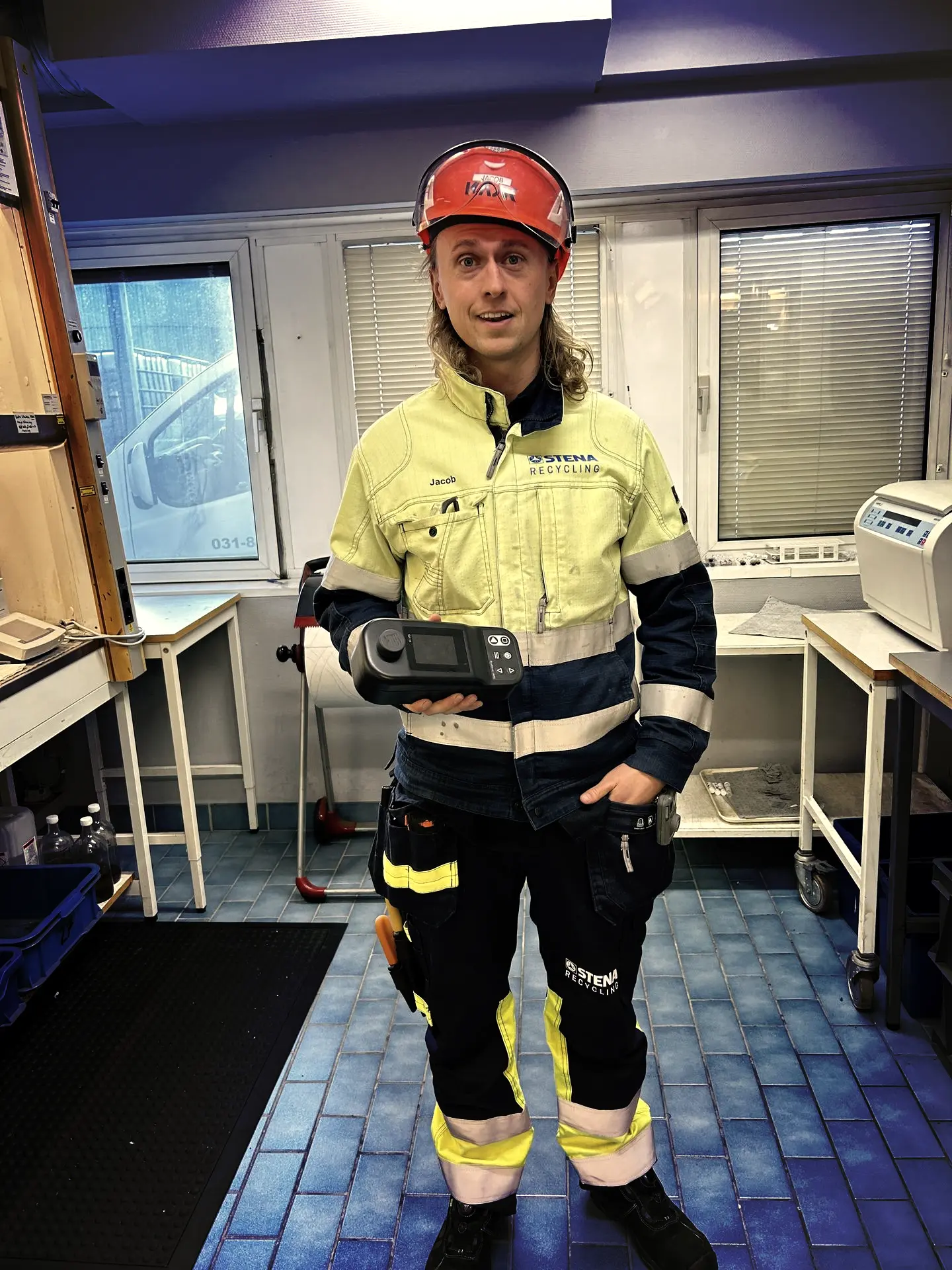
Jacob Öiens using IC-VIS in the laboratory during wastewater analysis for Stena Recycling

"The new analysis instrument has improved the reliability of our analyses and streamlined our work. This allows us to provide our customers with even more precise results."

— Jacob Öiens, Laboratory Manager, QC West (analyses for Stena Recycling)
— What changed

What changed in the workflow.

Conventional
Sample
Filter / dilute where needed
Reagent chemistry
Measurement
IC-VIS™
Sample
Reagent chemistry
IC-VIS™ measurement
Turbidity compensationExtended method range (selected methods)

For suitable methods and sample conditions — other method-specific preparation, digestion or chemistry may still be required.

— Data example

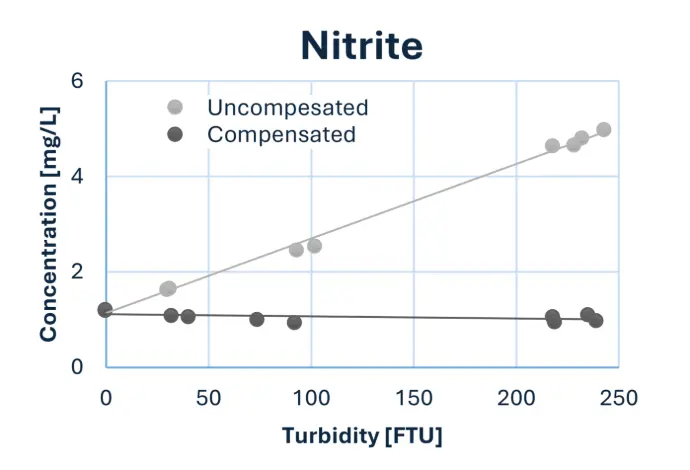
Same concentration. Different turbidity.

Samples with the same analyte concentration but different turbidity levels were measured to demonstrate the effect of IC-VIS™ turbidity compensation.

Chart: nitrite concentration vs. turbidity in FTU, showing uncompensated readings rising with turbidity while compensated readings stay near 1.1 mg/L
~1.1 mg/L
In this example: nitrite stayed near this value from 0 to ~240 FTU turbidity, after compensation

Suspended particles can add optical bias to a reagent-based color measurement. Instant Clarity™ compensates for this turbidity contribution, helping preserve the chemically generated color signal. By compensating for optical interference from turbidity, IC-VIS™ can reduce the need for filtration in suitable colorimetric wastewater methods. Explore the technology →

— Data example

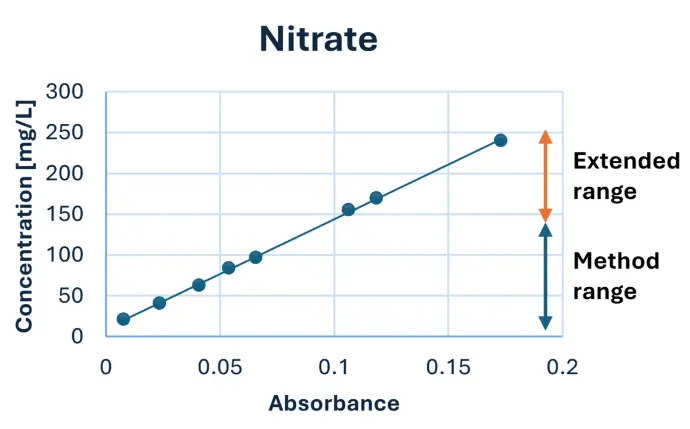
More range from an established method.

For suitable methods, the IC-VIS™ calibration can be extended beyond the standard reagent-kit range while maintaining a useful linear response.

Chart: nitrate concentration vs. absorbance, showing a linear response extended from the standard method range up to approximately 240 mg/L
20–150 → ~240 mg/L
In this example: nitrate calibration extended past the standard method range while staying linear

A wider usable range can reduce the need for dilution when concentrations exceed the standard method range — for suitable, application-dependent methods.

— Supporting context

Established reagent chemistry.

IC-VIS™ supports methods from suppliers including Hach · Macherey-Nagel · Merck · Lovibond. Current library coverage includes parameters such as COD · nitrate · nitrite · ammonium · phosphate · chlorine · TOC.

Browse the Method Library →
— Looking ahead

From portable analysis toward continuous monitoring.

Following the handheld wastewater work, Spec-Imaging and Stena Recycling have also explored how optical analysis can move toward higher-frequency measurements in flowing water.

See the ongoing IC-SPECTRO™ monitoring project →
Product route

IC-VIS™ →

Portable colorimeter — the instrument used in this case.

— Also see

Have a difficult wastewater sample?

Tell us what parameter you need to measure and what the sample looks like.

Discuss your applicationBrowse the Method Library →All case studies →